0

Your Cart


Product title goes here
$19.95
Thank you! Your submission has been received!
Oops! Something went wrong while submitting the form.
No items found.
Training advice & event day tips for one of the longest & most epic lake swims in the UK.
This guide gives you an honest view of what Windermere is really like, who it suits best, & how to prepare so you can approach it with confidence rather than nerves.
By Rebecca Wetten, Co-Founder & Head Coach at Catch
Windermere is the biggest & most demanding of the Chillswim swims. It’s the longest distance, the most logistically complex & the one that asks the most of you mentally as well as physically.
The swim covers the full length of England’s largest lake, finishing in the north of the lake near Waterhead. It feels less like a single swim & more like a full-day expedition.
Windermere is more lively than Coniston or Ullswater, with towns, ferries & working boat traffic along its length. That doesn’t make it less beautiful. You’ll still have long stretches of calm, open water, mixed with moments that remind you this is a living lake.
Swimmer numbers are smaller here, usually around 450-550. Some people taking this on are completing the Chillswim Triple Crown, which gives the event an epic, celebratory atmosphere. This swim suits confident open water swimmers who are comfortable over long distances.

Train your mind
It's critical that you psychologically prepare for Windermere -it is more than just a patience test. You’re in the water for a long time, & your mind needs to be on board for you to have a positive experience.
Before race day, spend time thinking about:
- Why Windermere matters to you
- What you’ll do when the swim feels repetitive
- How you’ll respond if things feel hard on event day
Focus on technique
Over 11 miles, efficiency is non-negotiable. Any wasted movement adds up.
Key areas to focus on:
- Head & body position - staying high & flat to reduce drag
- Breathing - relaxed, rhythmic breathing you can hold for hours
- Kick - keeping the effort low but the legs high
This is not a swim to muscle your way through. Smooth, efficient movements will carry you much further when fatigue builds.
Build consistency & endurance
Windermere rewards consistent preparation over time, not heroic training weeks.
Aim for 3-4 swims per week over several months, gradually extending your longest swims.
A good balance looks like:
- Technique swims - keeping movement efficient as fatigue builds
- Endurance swims - long, steady efforts building comfort with time
- Pace variation - short sections quicker than race pace to maintain fitness
Every 4-5 weeks, reduce volume by around a third. These lighter weeks help your body & brain absorb the work.
Practise in open water
This swim demands genuine open water confidence.
Conditions can vary across the lake, & you’ll spend long stretches away from shore. Being relaxed outdoors is essential.
Practise:
- Long, uninterrupted open water swims
- Feeding while stopped or treading water
- Swimming when conditions aren’t perfectly flat
- Staying calm around water traffic or other swimmers
Most difficulties on the day come from lack of open water experience rather than lack of fitness.

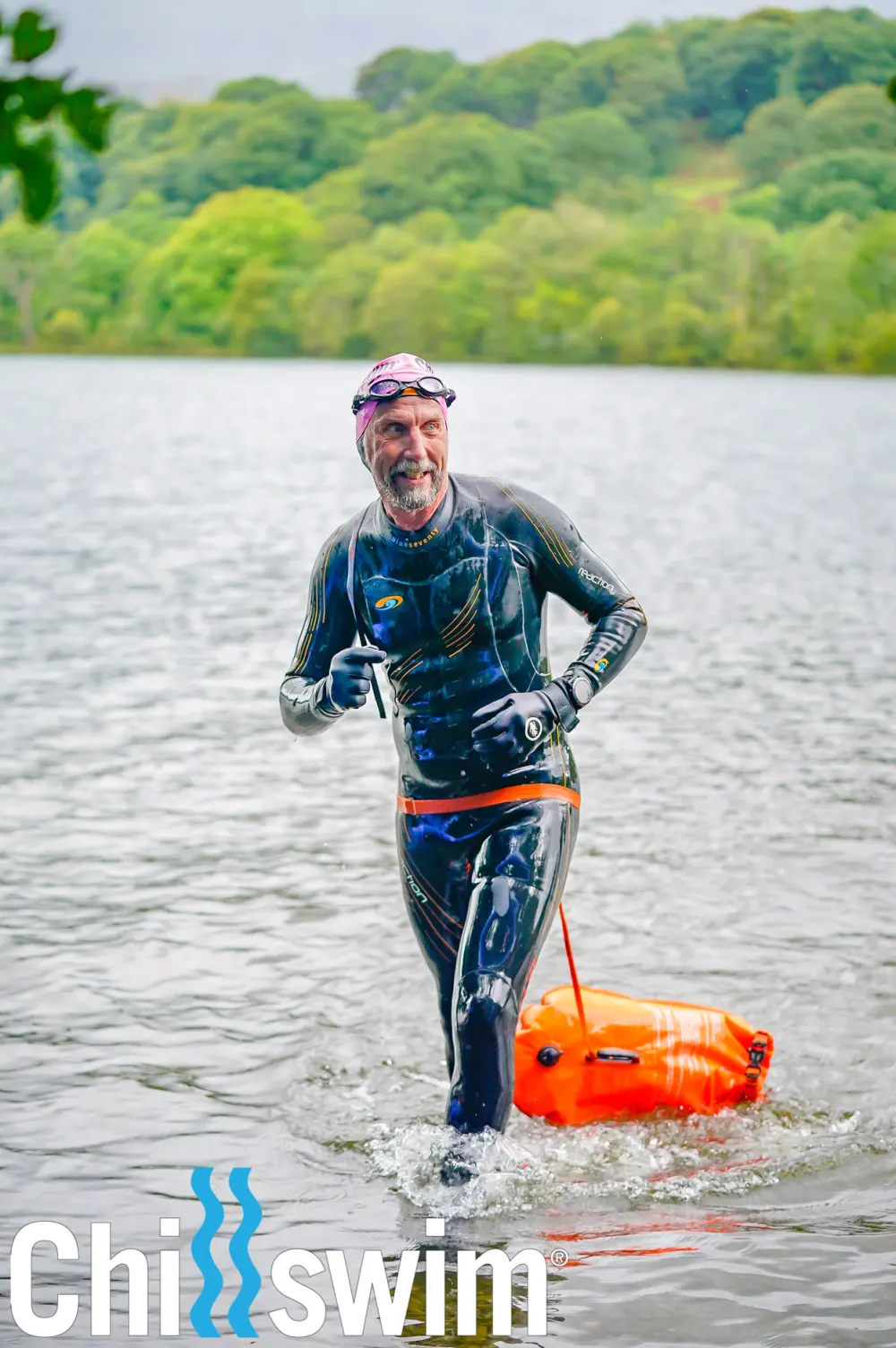
Registration takes place at HQ north of Ambleside, with shuttle buses taking swimmers to the start at the southern end of the lake.
For parking, leave your car at HQ, which swimmers will be returned to after the finish.
Windermere starts early, with some waves entering the water in low light, so arriving the day before is strongly recommended.
Kit rules with the shuttle buses are:
- Wetsuit swimmers may only take what they swim in, plus footwear
- Skin swimmers are allowed a small bag for some warm clothes
There are multiple cut-off points during the swim. These are firm due to boat traffic & safety planning, but achievable with sensible pacing & fuelling.
Give yourself more than one way to succeed:
- Bronze - complete the swim safely
- Silver - finish feeling steady & in control
- Gold - execute your pacing & fuelling exactly as planned
For most people, Windermere shouldn't be about chasing a time. It’s about completing an epic, point-to-point long distance swim in a beautiful setting.
Feed stations
Feed stations are positioned roughly every mile on anchored boats, staffed by calm, experienced volunteers. They will be stocked with jelly babies, energy drinks & water.
Tow float snacks
Tow floats are mandatory. Use yours to carry gels or your favourite snacks (believe it or not, pork pies & lasagne have featured as tow float snacks at Windermere before) so you’re never relying solely on the next feed station.
Hydration
Cool water reduces dehydration risk, but starting hydrated still matters. Sip fluids the evening before & again a few hours before your start.
Fuelling
Energy management is critical here. Plan to fuel roughly once an hour from early on.
Good options include:
- Soft, non-chewy sweets that are easy to eat in the water
- Gels tucked into your wetsuit or tow float
- Carb drinks if liquids suit you better
Practise exactly what you’ll use on race day in your training.
Goggles
Clear lenses usually give the best all-round visibility. Anti-fog properly & make sure they’re secure.
Wetsuit or skins
Most swimmers choose a wetsuit for warmth & buoyancy. If swimming skins, you’ll need excellent cold tolerance & solid open water experience.
Extras
A bright tow float is mandatory. Neoprene accessories can help with warmth, but they also add drag.
Those easier days are what allow you to arrive ready.
About 7-10 days before race day, reduce training volume by around half. Keep a few short swims to stay loose, but avoid squeezing in extra distance late on.
The day before:
- Register the evening before & avoid the early rush
- Eat familiar food
- Hydrate well
- Get a decent night’s sleep
On the day:
- Start very steady & save your energy - Windermere rewards patience
- Breaking the swim into chunks really helps mentally with such a long distance: think feed to feed, mile to mile, or buoy to buoy
- Fuel early & regularly
- Stay calm & keep moving forward
If things feel tough, slow down, float, fuel & reset. Support is always close by.
After the swim:
This is a big moment. Potentially your biggest ever swim. Let it land.
- Get into dry, warm layers quickly
- Eat something carb-heavy within 30 minutes
- Take several easy days
- Reflect on the journey, not just the finish
For many, Windermere becomes a defining swim - the one that changes how they see themselves as a swimmer.
Catch builds fully personalised training plans & technique courses to help you prepare calmly & confidently for Chillswim.
With Catch Gold, you’ll get a plan that adapts to your schedule, paired with weekly video lessons & coach support - so you arrive ready to enjoy the challenge, not just endure it.
.png)
.avif)
.png)
.png)
save 38% vs monthly billing
Not for the faint-hearted however this swimrun has it all. Swims of up to 2km, pristine trails, uninhabited islands, 10 islands, potential for seals to cheer you on, some of the best view points on Scilly. There really is nothing else like this event!
Find out more
Catch - your digital swim coach - is the Official Training Partner for Great North Swim. Here’s your guide to training, kit, fuelling & race day.
Find out more
Start with Catch Free.
Get structured swim sessions each week, a monthly technique lesson, watch sync & full community access - free forever.