0

Your Cart


Product title goes here
$19.95
Thank you! Your submission has been received!
Oops! Something went wrong while submitting the form.
No items found.
Catch is the Official Training Partner for Dock2Dock. Here’s your guide to training & everything you need to know before the 10km.
By Rebecca Wetten, Co-Founder & Head Coach at Catch
The Dock2Dock 15k is a rare opportunity. There aren’t many mass-participation 15k swims out there, which makes this distance both special & serious. At 15,000 metres, this is ultra-distance territory – a swim that demands patience, discipline & smart preparation.
This distance suits experienced open water swimmers who are comfortable with long, continuous swimming, or confident pool swimmers who’ve already built strong endurance & are ready for a big step up. It’s not about brute fitness alone – it’s about staying efficient, fuelled & mentally steady for several hours.
The Royal Docks provide an ideal setting for a swim of this length. Sheltered water, clear loops & excellent safety cover allow you to focus on execution rather than conditions. Compared to exposed lake or sea ultras, Dock2Dock 15k is far more controlled – which is exactly what you want when you’re swimming for this long.
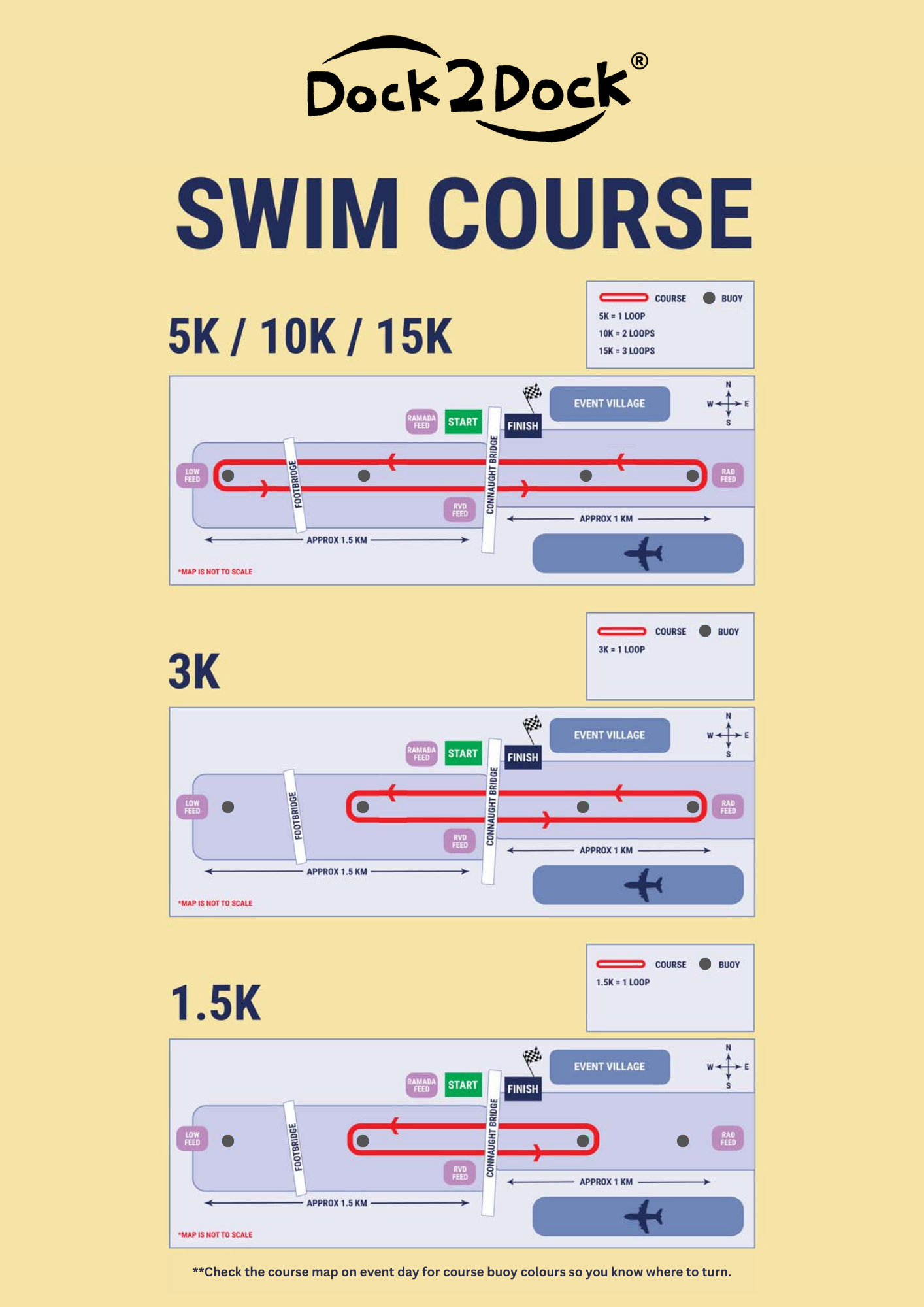
The 15k follows clearly marked loops with large buoys & consistent sighting lines. Navigation is straightforward, which massively reduces cognitive fatigue over a long swim.
The field thins out early, so expect long stretches where you’re swimming solo or in small groups. Safety crews are visible throughout, & feed stations are available – an absolute non-negotiable for a swim of this length.
The atmosphere is focused rather than frantic. This isn’t about racing others – it’s about managing yourself well from start to finish.
.jpg)
Training for 15k is about layering endurance gradually over months, not weeks. Most swimmers benefit from 3–4 swims per week, occasionally five if recovery allows.
Your training should include:
- Technique-first sessions that reinforce relaxed, repeatable movement. At 15k, inefficiency is expensive.
- Long endurance swims that build beyond 2 hours, progressing carefully as fitness develops.
- Steady aerobic work at a pace you could hold while breathing calmly & evenly for a long time.
- Occasional threshold efforts to keep strength & pace ticking over, without tipping into fatigue.
Weekly volume varies hugely by swimmer, but many build towards 12–18km at peak, sometimes more depending on background & available time. What matters most is consistency, not chasing big numbers.
Plan regular recovery weeks every 4–5 weeks where volume drops by around a third. These weeks are essential to avoid burnout & injury.
The biggest challenge of a 15k is staying positive & motivated. There will be moments where time stretches & motivation dips – that’s normal.
Before race day, get clear on why you chose this distance. Break the swim into manageable chunks – laps, feeds, time blocks – rather than thinking about the full distance.
Mantras can help, but so can neutral focus. Counting strokes, checking posture, relaxing your jaw & shoulders – small anchors keep your mind steady when fatigue creeps in.
At 15k, effort control matters more than speed. You should be swimming at an intensity where breathing stays calm & movements feel sustainable.
Focus on staying long in the water, keeping your head position stable & breathing rhythm consistent. Any tension you carry early will show up hard later on.
Dock2Dock’s calm water makes this a great race to practise holding form even when tired – a skill that transfers brilliantly to other ultra swims.
You don’t need constant rough-water exposure for Dock2Dock, but you do need to be comfortable swimming continuously outdoors for long periods.
Practise feeding in open water, swimming without breaks, & managing temperature changes. If you’re training mostly in the pool, make sure your longest sessions simulate race conditions as closely as possible.
Fuelling well is the difference between finishing strong & grinding through the final third.
Most swimmers aim for 40–60g of carbohydrates per hour over a swim of this length. Feed early & regularly – don’t wait until you feel empty.
Use feed stations to your advantage. Practise exactly what you’ll take on race day so your gut is trained as well as your body. Caffeine can be useful later in the swim if you tolerate it well.
Hydration still matters, even in cool water. Start hydrated & top up steadily.
Choose kit you trust over kit that looks fast. Comfort beats marginal gains over several hours.
Wetsuits are optional but popular for buoyancy & warmth. Whatever you wear, test it on long swims. Goggles should be comfortable enough to forget about entirely.
Have warm layers ready for after – post-swim chill hits harder after long efforts.
Fatigue management is critical before a 15k. In the final 10–14 days, gradually reduce volume while keeping short swims to stay loose.
Avoid last-minute panic training. You won’t gain fitness late on, but you can easily lose freshness.
Arrive early, stay calm & stick to your plan. Start slower than feels necessary – you’ll thank yourself later.
Fuel from the first feed, sight consistently & keep checking in with your body position & breathing. If things wobble, slow down slightly, reset & keep moving forward.
This is a swim about patience, not heroics.
Finishing a 15k is a huge achievement. Warm up quickly, refuel generously & expect a few low-energy days afterwards – that’s normal.
Many swimmers find the confidence gained from completing a 15k changes how they see themselves in the water. It’s a powerful milestone.
If Dock2Dock 15k is on your radar, Catch can support you with a fully personalised training plan that adapts to your life, swimming background & goals, paired with a tailored video technique course to help you train smart & swim strong on race day.
.png)
.avif)
.png)
.png)
save 38% vs monthly billing
Catch - your digital swim coach - is the Official Training Partner for Great North Swim. Here’s your guide to training, kit, fuelling & race day.
Find out more
The Dock2Dock 10k is a true marathon swim - a distance that demands consistency, smart fuelling & serious mental stamina as much as physical fitness. This guide covers everything from building your training base to race day pacing strategy, so you can take on London's Royal Docks with confidence.
Find out more.jpg)
Start with Catch Free.
Get structured swim sessions each week, a monthly technique lesson, watch sync & full community access - free forever.